Non-surgical vaginal dilatation
For motivated patients, progressive dilator therapy can help form a vaginal canal over time using pressure techniques. While non-invasive, it requires patience, motivation, and regular follow-up.
Laparoscopic Vaginal & Reconstructive Surgeries · Ludhiana, Punjab
Compassionate counselling with advanced surgical expertise — offering both traditional and laparoscopic vaginoplasty techniques to help women with MRKH regain anatomical normalcy, sexual function, and confidence.

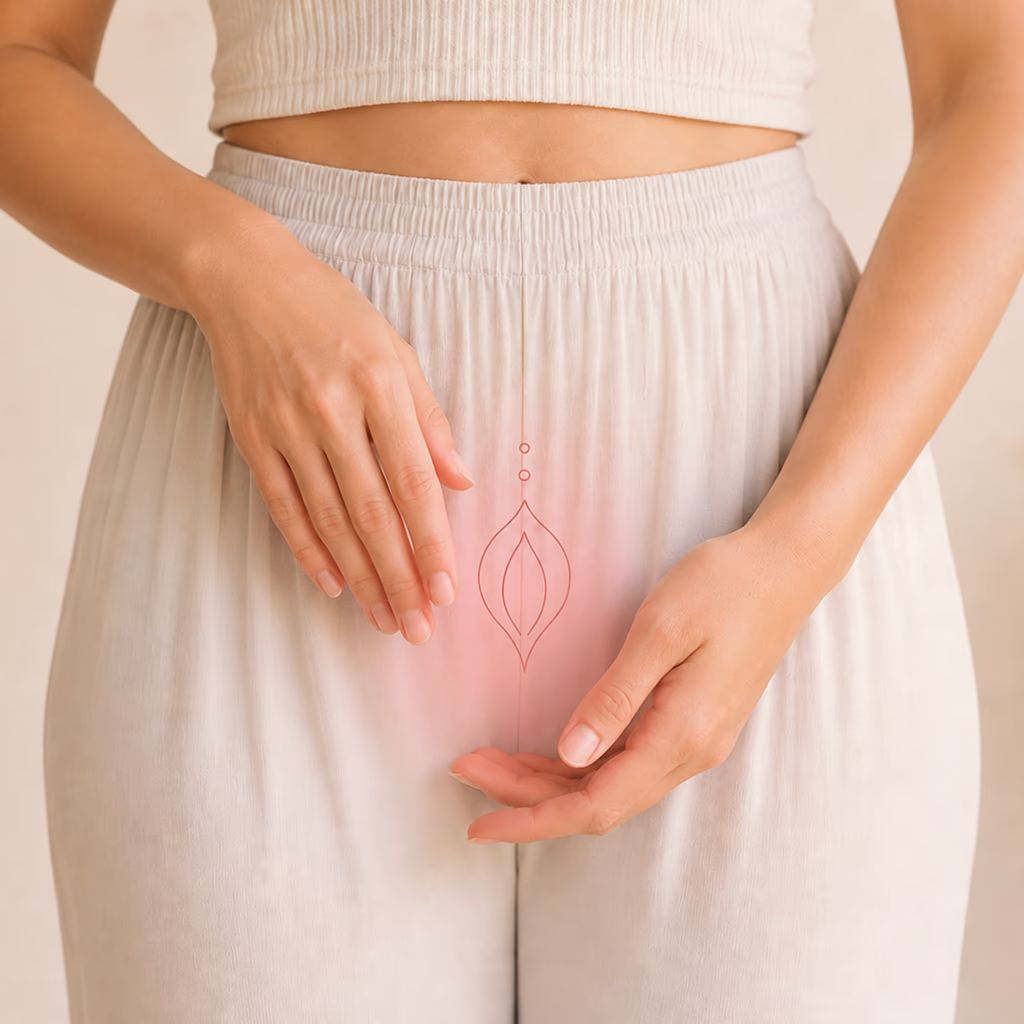
Mayer-Rokitansky-Küster-Hauser (MRKH) Syndrome, also called Rokitansky Syndrome, is a rare congenital condition in which a woman is born without a fully formed uterus and upper vaginal canal, despite having normal ovaries, external genitalia, and female chromosomes (46XX). This means that puberty and breast development occur normally, but menstruation does not start (primary amenorrhea) due to the absence of the uterus. At Dr Rama Sofat Hospital, we combine compassionate counselling with advanced surgical expertise to offer both traditional and laparoscopic vaginoplasty techniques that help women with MRKH regain anatomical normalcy, sexual function, and confidence.
MRKH affects approximately 1 in 4,500 to 5,000 female births. It is often diagnosed in the teenage years when girls visit the doctor for absence of periods despite normal secondary sexual development.
MRKH affects approximately 1 in 4,500 to 5,000 female births.
The exact cause of MRKH remains unclear, but it results from developmental failure of the Müllerian ducts in early fetal life. While it's not hereditary in most cases, genetic mutations and environmental factors during pregnancy may play a role.
A thorough diagnostic workup helps confirm MRKH and guide treatment:
For motivated patients, progressive dilator therapy can help form a vaginal canal over time using pressure techniques. While non-invasive, it requires patience, motivation, and regular follow-up.
When dilation therapy is unsuccessful or not suitable, vaginoplasty offers a permanent and natural solution. There are two main surgical techniques:
Traditional (McIndoe) Vaginoplasty
A space is created between the bladder and rectum to form a vaginal canal. A skin graft, usually taken from the patient's thigh or buttock, is shaped into a mold and placed inside this space. The graft gradually lines the cavity, forming the vaginal wall.
Advantages: Time-tested and effective for patients not suitable for laparoscopy. Produces satisfactory functional and cosmetic results.
Limitations: Skin graft may require careful postoperative care to prevent contraction. Recovery is slightly longer and scarring may be more visible.
Laparoscopic Davydov Vaginoplasty
This modern, minimally invasive approach uses the patient's own peritoneal tissue (inner abdominal lining) to form the vagina, ensuring a natural feel and function.
Laparoscopic incisions
Tiny laparoscopic incisions are made.
Peritoneum mobilization
The peritoneum is mobilized and a tunnel is created between the bladder and rectum.
Flap attachment
The peritoneal flap is pulled down and attached to the vaginal opening.
Tissue transformation
Over time, this tissue transforms into lubricated vaginal mucosa, similar to natural lining.
Although women with MRKH cannot menstruate or carry a pregnancy due to absence of uterus, their ovaries function normally, meaning biological motherhood is possible through IVF and surrogacy. Sexual life after vaginoplasty is natural, comfortable, and fulfilling.
Ovaries function normally in MRKH — biological motherhood is possible through IVF and surrogacy.
Usually after puberty, when physical growth is complete and the patient is emotionally ready.
Minimal discomfort with laparoscopic methods. Most patients recover within 2 weeks.
It is permanent with regular postoperative dilation and follow-up.
Yes. Most women report full satisfaction and comfort after complete healing.
Yes, when performed by skilled laparoscopic surgeons in a well-equipped setup.
If you or your loved one has been diagnosed with MRKH Syndrome, book a confidential consultation at Dr. Rama Sofat Hospital, Ludhiana — where compassion meets advanced surgical care.