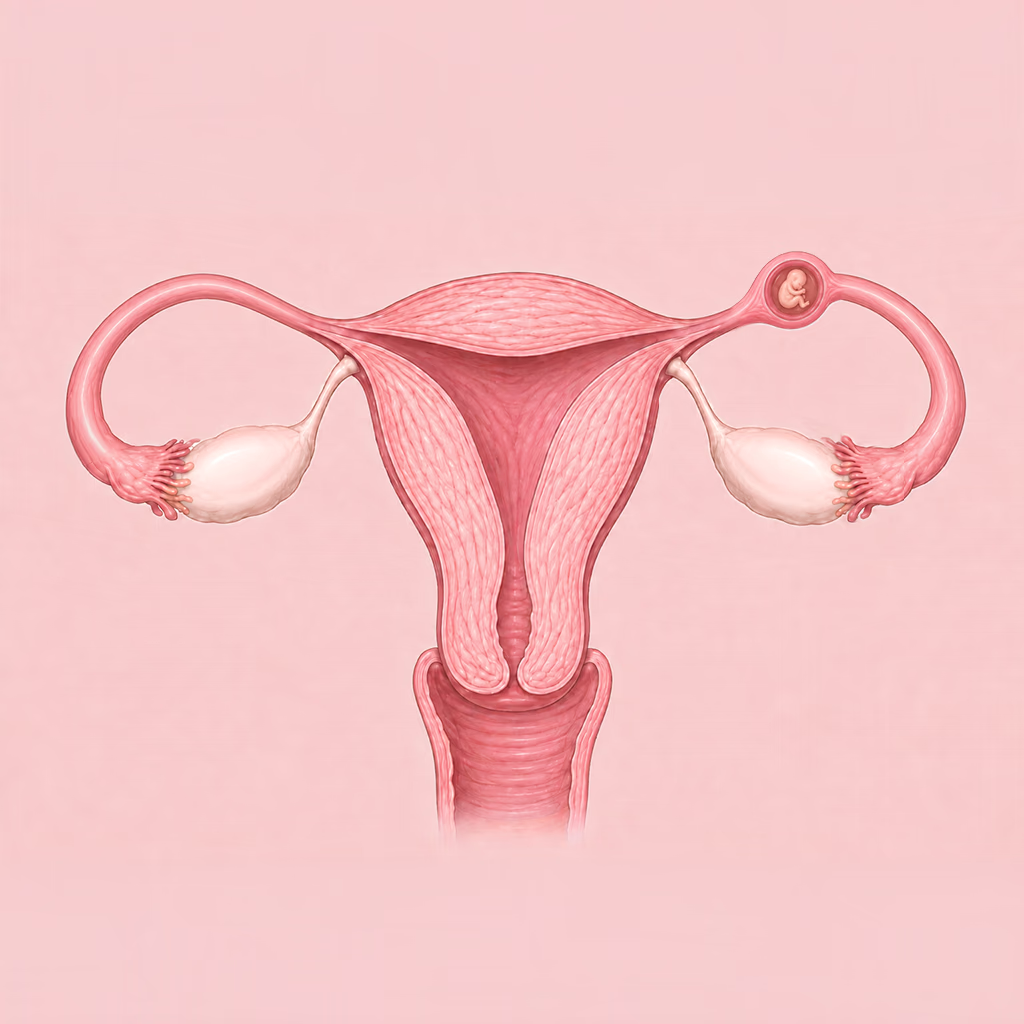
Understanding ectopic pregnancy
An ectopic pregnancy occurs when a fertilised egg implants and begins to grow outside the uterus — most commonly within a fallopian tube, but occasionally in the ovary, cervix, or abdominal cavity. Since the fallopian tube isn't designed to support a growing pregnancy, the embryo cannot develop normally and, if untreated, may cause the tube to rupture leading to internal bleeding and potentially life-threatening complications. At Dr. Rama Sofat Hospital, Ludhiana, we specialise in the laparoscopic management of ectopic pregnancies, focusing not only on saving the patient's life but also on preserving future fertility.
Incidence
Ectopic pregnancy affects nearly 1 in 50 pregnancies worldwide. The condition can occur in women of any reproductive age, though it is more common among those with previous pelvic infections, tubal surgeries, or assisted reproductive treatments. Thanks to early diagnosis and advanced laparoscopic techniques, survival rates and fertility outcomes have improved dramatically over the years.
1 in 50 pregnancies worldwide is ectopic — early diagnosis saves lives and fertility.
Causes & risk factors
- Pelvic inflammatory disease (PID) caused by infections such as chlamydia or gonorrhoea
- Previous ectopic pregnancy
- Tubal or pelvic surgeries, including sterilisation or tuboplasty
- Endometriosis, which can distort the fallopian tubes
- Conception with an intrauterine device (IUD) in place
- Fertility treatments (like IVF) — although rare, ectopic implantation can still occur
- Smoking and exposure to toxins that impair tubal function
Even without clear risk factors, any woman can experience an ectopic pregnancy, underscoring the importance of early medical evaluation.
Symptoms
Symptoms often begin 6–8 weeks after conception:
- Sharp, one-sided lower abdominal or pelvic pain
- Vaginal spotting or abnormal bleeding
- Shoulder pain (a sign of internal bleeding)
- Dizziness, fainting, or weakness due to blood loss
- Positive pregnancy test without a visible gestational sac on early ultrasound
Because symptoms can resemble those of a normal early pregnancy or miscarriage, early ultrasound evaluation is crucial whenever there is pain or bleeding.
Diagnosis
- Transvaginal Ultrasound: The most reliable tool to locate the pregnancy and confirm the absence of an intrauterine gestational sac.
- Serum B-hCG Testing: Serial blood tests to assess hormone levels; in ectopic pregnancies, hCG levels rise abnormally slowly.
- Diagnostic Laparoscopy: In uncertain cases, laparoscopy is both diagnostic and therapeutic — allowing direct visual confirmation and immediate treatment.
Our use of high-resolution 4K HD laparoscopic systems ensures precise identification of even small tubal pregnancies and associated bleeding sites.
Impact on women's health & fertility
If not diagnosed and treated early, ectopic pregnancy can cause tubal rupture, severe internal bleeding, and in rare cases, shock or death. Beyond the physical risks, it also carries a heavy emotional toll. However, with timely laparoscopic intervention and expert fertility guidance, most women can recover fully and go on to have healthy pregnancies in the future.
When to see a doctor
- Sudden or severe abdominal or shoulder pain during early pregnancy
- Unexplained vaginal bleeding or spotting
- Dizziness or fainting spells
- Positive pregnancy test but no gestational sac seen on early ultrasound
Early intervention can save the fallopian tube, prevent complications, and preserve fertility.
Treatment options
01 Medical Management (Methotrexate)
If diagnosed early and the tube is intact, Methotrexate therapy can be used to stop the growth of the pregnancy tissue. This option avoids surgery and allows the tissue to dissolve naturally over time. However, it requires careful monitoring of β-hCG levels and close follow-up. Methotrexate is suitable for small, unruptured ectopic pregnancies and women who wish to preserve fertility.
02 Laparoscopic Surgery
When the ectopic pregnancy is advanced, or the tube is damaged, laparoscopic surgery is the safest and most effective treatment. Our specialists perform:
Laparoscopic Salpingostomy
A small incision is made on the fallopian tube to remove the pregnancy tissue. The tube is preserved to maintain natural fertility. Ideal for small, unruptured ectopic pregnancies with minimal tubal damage.
Laparoscopic Salpingectomy
If the tube is ruptured or severely damaged, it is carefully removed. The remaining tube is examined and preserved whenever possible.
Laparoscopic Adhesiolysis
Surrounding pelvic adhesions are removed to improve tubal patency and fertility potential.
Advantages of laparoscopic approach
Keyhole incisions with minimal scarring
Reduced blood loss and pain
Faster recovery (discharge within 24 hours in most cases)
Shorter hospital stay and minimal complications
Simultaneous evaluation of the other tube, ovaries, and uterus
Recovery & follow-up
Most women recover rapidly after laparoscopic treatment:
- Hospital stay is usually less than 24 hours. Light activities can resume within 3–5 days.
- Mild abdominal discomfort may persist for a few days.
- Serial B-hCG tests are performed to ensure complete resolution.
- Women are advised to wait 3–6 months before attempting conception again to allow healing.
Emotional support and counselling play an important role and at our hospital, our care extends beyond the operation theatre to your full recovery.
Future fertility considerations
After treatment, fertility depends on the health of the remaining tube and overall pelvic condition. Many women conceive naturally after one tube removal, while others benefit from fertility-enhancing procedures or IVF. At Dr. Rama Sofat Hospital, we offer comprehensive post-treatment fertility guidance, including tubal patency evaluation, ovarian reserve assessment, and personalised IVF plans if required.
Prevention & lifestyle management
- Early treatment of pelvic infections
- Safe sexual practices to prevent PID
- Quitting smoking
- Maintaining a healthy lifestyle and weight
- Regular gynaecological check-ups, especially after tubal surgery or infection
Myths vs facts
| Myth | Fact |
| Ectopic pregnancy means I can never conceive again. | Many women conceive naturally or with IVF after recovery. |
| Both tubes are always removed. | Only the affected tube is treated; the other is preserved if healthy. |
| Methotrexate affects future fertility. | It does not harm fertility if recovery and follow-up are complete. |
| Surgery is dangerous for fertility. | Laparoscopic surgery is safe, minimally invasive, and fertility-friendly. |
Why choose Dr. Rama Sofat Hospital
24x7 emergency care for ectopic pregnancy
State-of-the-art laparoscopic technology
Comprehensive fertility services under one roof
Led by Dr Amit Sofat & Dr Ruchika Sofat — experts in laparoscopic gynaecology
Focus on preserving life, protecting fertility, and providing hope
Trusted by thousands across North India