Medical Management
While mild inflammation can be treated with antibiotics and hormonal support, structural fimbrial damage usually requires surgical correction.
Laparoscopic Tubal Surgeries · Ludhiana, Punjab
Restoring the natural path to motherhood — a fertility-preserving, minimally invasive surgery that gently reconstructs and opens the fimbrial ends of the fallopian tubes.

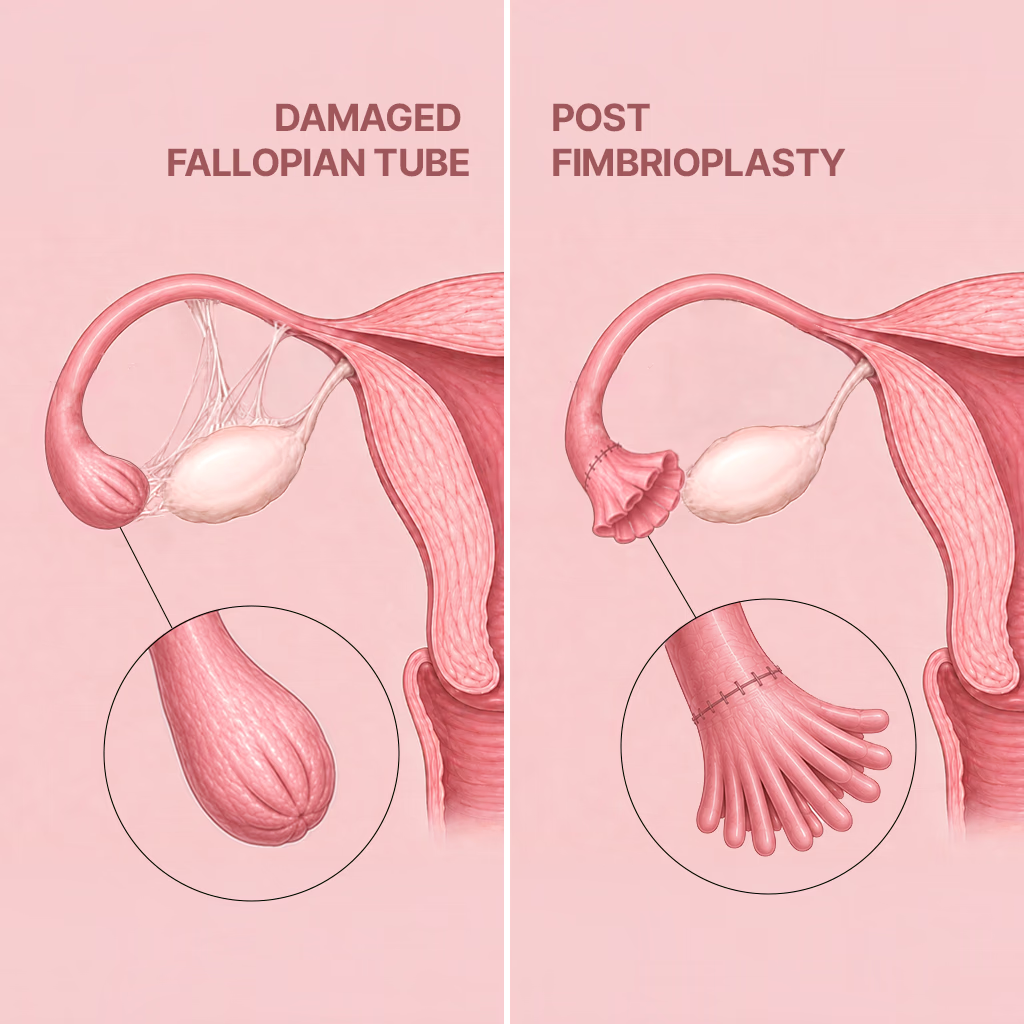
The fallopian tubes are the delicate bridges between the ovaries and the uterus — the very site where life begins when the egg and sperm meet. When the fimbriae, the soft finger-like ends of the tubes, become scarred or blocked, the egg cannot be picked up after ovulation, making natural conception difficult. Laparoscopic Fimbrioplasty is a fertility-preserving, minimally invasive surgery that gently reconstructs and opens the fimbrial ends of the fallopian tubes. At Dr Rama Sofat Hospital, Ludhiana, our experts perform this advanced procedure with precision, helping women regain the ability to conceive naturally while preserving their reproductive organs.
Fimbrial blockage or damage may result from:
These conditions can seal or distort the fimbrial opening, preventing egg pickup and fertilisation.
Fimbrial block often develops silently. Some women may notice:
At Dr Rama Sofat Hospital, we use world-class diagnostics to identify and treat tubal damage:
Laparoscopy allows both diagnosis and treatment in a single sitting, avoiding multiple procedures.
When the fimbrial ends are blocked, the egg released from the ovary cannot meet the sperm. This leads to infertility, and in some cases, increases the risk of ectopic pregnancy if partial blockage exists. Early detection and laparoscopic correction can restore tubal function and natural conception potential.
Consult a fertility specialist if you:
Prompt evaluation prevents further tubal damage and maximises your chances of natural conception.
While mild inflammation can be treated with antibiotics and hormonal support, structural fimbrial damage usually requires surgical correction.
Performed under general anaesthesia, this precise, minimally invasive surgery involves:
Step 1
Tiny keyhole incisions through which a high-definition laparoscope and micro-instruments are introduced.
Step 2
Evaluation of both tubes and removal of adhesions surrounding the fimbrial ends.
Step 3
Opening of the blocked fimbrial end using fine microsurgical instruments or micro-current energy.
Step 4
Reconstruction of fimbriae: The delicate inner folds are carefully everted and reshaped to restore their natural form.
Step 5
Dye Test: A blue dye is passed to confirm that the tube is open and functional.
The procedure typically lasts 45–60 minutes and allows discharge within 24 hours.
After surgery, patients are advised to try for natural conception for 6–8 months. If conception does not occur, or if tubes remain partially damaged, IVF becomes the recommended next step. In women with severe hydrosalpinx or extensively scarred fimbriae, IVF after laparoscopic removal of the diseased tube offers the best pregnancy success rates. At Dr Rama Sofat Hospital, many couples conceive naturally within 6–12 months of this procedure. Our integrated fertility team ensures every woman receives a personalised plan combining surgical precision with reproductive medicine expertise.
Regular check-ups and early fertility assessment after infection or surgery can help preserve tubal health.
Myth
Fact
It is a laparoscopic surgery to repair and open the fimbrial (outer) ends of blocked fallopian tubes, restoring their ability to pick up eggs.
Women with distal tubal blockage, fimbrial damage, or mild hydrosalpinx who wish to conceive naturally.
No. It's done under general anaesthesia using tiny keyhole incisions. Most women return home the same day with minimal discomfort.
Usually after 1–2 menstrual cycles, once healing is complete. Many women conceive naturally within 6–12 months post-surgery.
When performed by experienced laparoscopic surgeons, pregnancy rates range from 30–50% in selected patients.
If natural conception doesn't occur within 6–8 months, IVF may be advised depending on tubal condition and age.
Minor risks include re-blockage or rare ectopic pregnancy. Proper follow-up and timing of conception help prevent complications.
Fimbrioplasty repairs and reshapes the natural fimbrial opening, while salpingostomy creates a new opening in a completely sealed tube.
Yes. Bilateral fimbrioplasty is possible if both tubes are suitable for repair.
If you have been diagnosed with fimbrial blockage or tubal damage, book your consultation at Dr. Rama Sofat Hospital, Ludhiana — restoring your natural path to motherhood.