Insertion
The hysteroscope — a slim tube fitted with a light and camera — is gently passed through the vagina and cervix into the uterine cavity.
Hysteroscopic Procedures · Ludhiana, Punjab
A modern, minimally invasive procedure that allows both diagnosis and surgical correction of problems within the uterine cavity — all through the vagina, without any incision on the abdomen. Restoring uterine health, enhancing fertility.

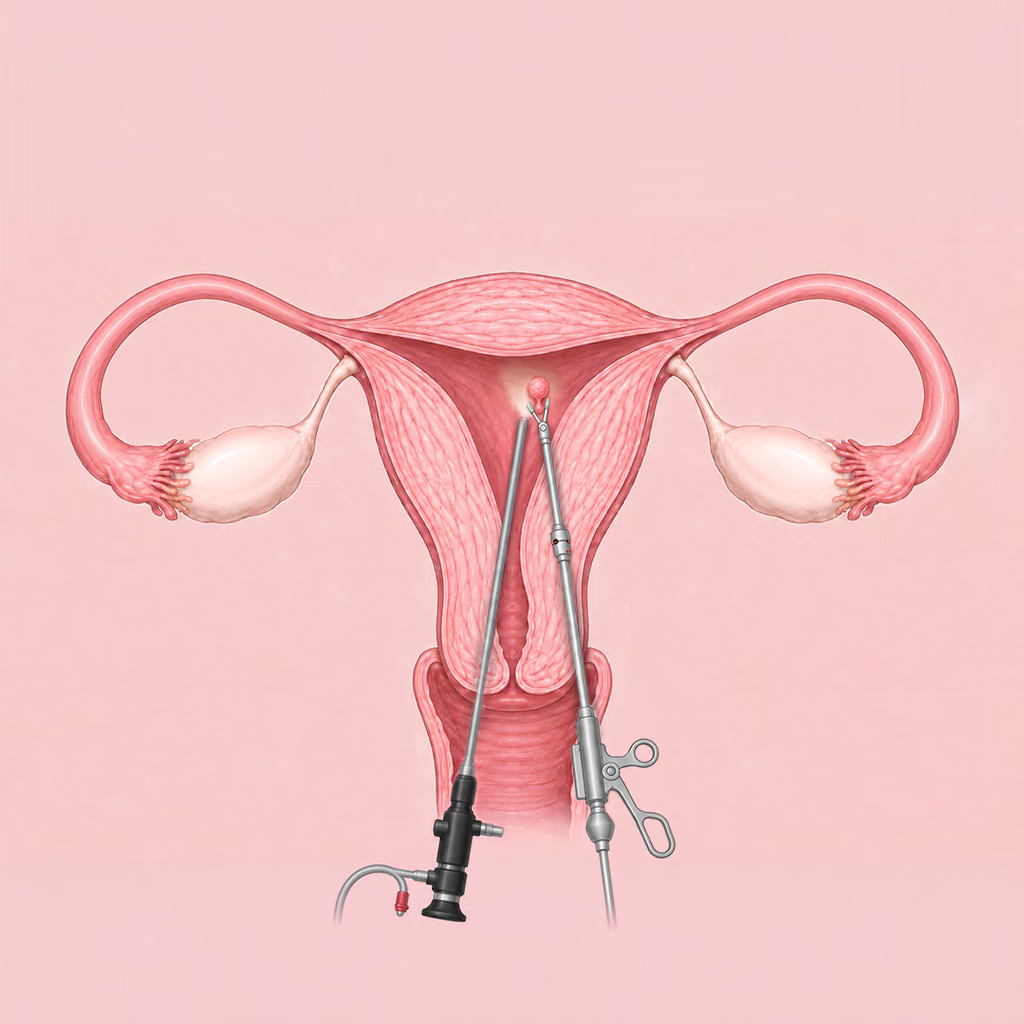
Using a thin telescope-like device called a hysteroscope, doctors can see inside the uterus with magnified clarity and use fine instruments to remove fibroids, polyps, adhesions, or correct uterine septa that interfere with fertility. At Dr. Rama Sofat Hospital, our specialists use the latest high-definition hysteroscopic systems and micro-instruments to ensure precision, safety, and fertility preservation.
Operative hysteroscopy is often advised when investigations such as ultrasound, HSG, or diagnostic hysteroscopy reveal:
Operative hysteroscopy is typically performed under short general anaesthesia or sedation as a day-care procedure.
The hysteroscope — a slim tube fitted with a light and camera — is gently passed through the vagina and cervix into the uterine cavity.
The uterus is filled with sterile saline for better visualisation.
Through the hysteroscope, miniature instruments are used to remove or correct the detected abnormalities.
The procedure usually takes 20 to 45 minutes.
Most patients can go home the same day and resume normal activities within a day or two.
01 · Septal Resection
A uterine septum is a congenital wall of tissue dividing the uterine cavity partially or completely. It can cause recurrent miscarriages, implantation failure, or preterm delivery.
During hysteroscopic septal resection, the septum is visualised directly and cut using micro-scissors or an electrical loop until a single, unified uterine cavity is restored. This precise correction improves the uterine space and significantly increases the chances of a full-term, healthy pregnancy.
Benefits
02 · Polypectomy
Endometrial polyps are soft, benign growths arising from the uterine lining that may cause irregular bleeding, spotting, or infertility.
Using a hysteroscope, these polyps are identified and removed with micro-scissors or resectoscope loops, ensuring complete clearance of the uterine cavity. The removed tissue is sent for histopathological examination to confirm diagnosis.
Benefits
03 · Myomectomy
This procedure removes submucous fibroids, which are fibroids projecting into the uterine cavity that may cause heavy bleeding or implantation failure.
A resectoscope — a hysteroscope with an electrical cutting loop — is used to shave off the fibroid layer by layer under direct vision. Fluid distension keeps the cavity open and helps the surgeon operate precisely without damaging surrounding tissue.
Benefits
04 · Adhesiolysis
Intrauterine adhesions (Asherman's Syndrome) occur when scar tissue forms inside the uterus, often after infections, D&C, or previous surgery.
During hysteroscopic adhesiolysis, the adhesions are carefully cut using fine scissors or energy devices under magnified view, freeing the uterine cavity and restoring normal shape and function. A small intrauterine balloon or oestrogen therapy may be used post-surgery to prevent re-adhesion and promote healthy endometrial regrowth.
Benefits
05 · Cornual Cannulation
Blockage at the tubal openings (cornua) inside the uterus can lead to infertility. Through hysteroscopy, a fine catheter or guidewire is gently introduced into the tubal openings under direct vision to clear the blockage — restoring tubal patency and natural fertility.
This technique is also a fertility-preserving alternative to traditional abdominal tubal recanalisation.
Benefits
06 · Retained Products Removal
After miscarriage, delivery, or previous surgery, some tissue may remain inside the uterus, causing infection or irregular bleeding.
Hysteroscopic removal ensures complete and targeted clearance of this tissue under direct vision, avoiding the blind scraping of traditional D&C and reducing the risk of uterine injury.
Benefits
Operative hysteroscopy plays a crucial role in enhancing conception outcomes — both naturally and in IVF. By restoring the normal uterine shape, removing fibroids or adhesions, and correcting septa, the endometrial environment becomes more receptive to embryo implantation.
At Dr. Rama Sofat Hospital, hysteroscopy is performed with advanced technology and decades of expertise to ensure every woman has the best possible chance at a healthy pregnancy.
At Dr. Rama Sofat Hospital, every operative hysteroscopy is performed with precision, compassion, and the singular goal of helping women conceive naturally or through IVF with confidence.
If you have been diagnosed with uterine fibroids, polyps, septum, adhesions, or any condition affecting your fertility, consult our specialists for advanced operative hysteroscopy.
Consult Dr Amit Sofat & Dr Ruchika Sofat at Dr Rama Sofat Hospital, Ludhiana, for expert operative hysteroscopy and personalised fertility care.