
Laparoscopic Cervical Surgeries · Ludhiana, Punjab

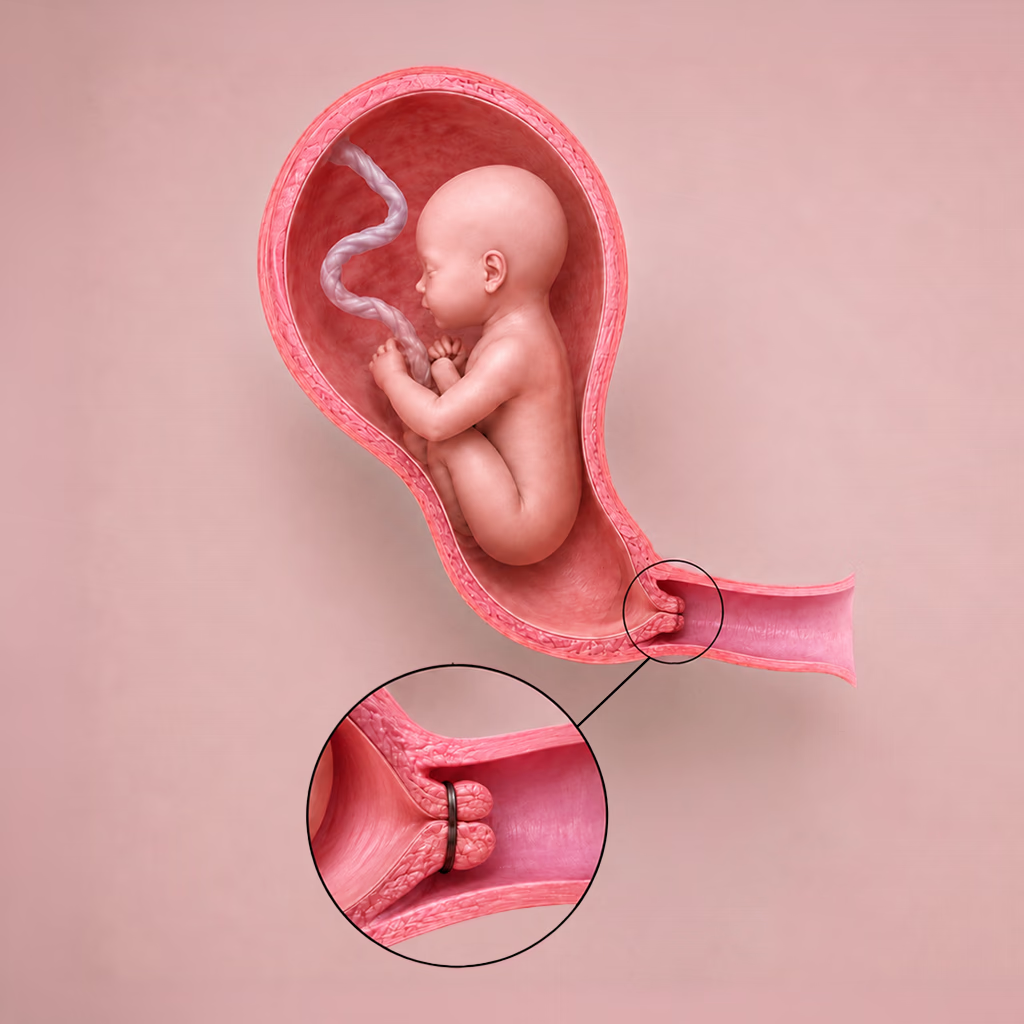
Cervical Cerclage

An advanced, fertility-preserving technique for women with cervical incompetence — providing stronger and higher placement of the stitch at the cervico-isthmic junction for long-term pregnancy support.

About cervical cerclage

Cervical incompetence is a condition where the cervix opens prematurely during pregnancy, leading to recurrent mid-trimester pregnancy losses or preterm deliveries. Traditionally, this condition was managed through a vaginal cervical cerclage, a stitch placed around the cervix to keep it closed during pregnancy. While effective for many women, this approach sometimes fails when the cervix is too short, scarred, or damaged from previous surgeries. At Dr. Rama Sofat Hospital, we offer the Laparoscopic Cervical Cerclage, a cutting-edge, minimally invasive alternative that provides stronger and higher placement of the stitch at the cervico-isthmic junction — the most effective level for long-term pregnancy support. This advanced procedure, pioneered and refined by experts like Dr. Amit Sofat, offers renewed hope to women who have experienced multiple pregnancy losses or failed vaginal cerclages.

Indications for cerclage

Laparoscopic or traditional cerclage may be advised for women who have:

  • Recurrent second-trimester miscarriages or painless cervical dilatation
  • Failed previous vaginal cerclage procedures
  • Congenitally short or traumatized cervix following surgery or infection
  • Cervical scarring due to cone biopsy, trachelectomy, or previous deliveries
  • A need for a pre-pregnancy (interval) cerclage before conception to avoid risk during pregnancy

Diagnosis of cervical incompetence

Diagnosis of cervical incompetence involves:

  • Detailed obstetric history — especially previous second-trimester losses with intact membranes
  • Transvaginal ultrasound to measure cervical length and assess funneling
  • Physical examination to identify a soft, effaced, or dilated cervix during early pregnancy
  • Review of past pregnancies and surgical history

Traditional vaginal cerclage techniques

01

McDonald's Cerclage

This is the most commonly performed vaginal cerclage. A non-absorbable suture is placed in a purse-string manner around the cervix through the vagina, without opening the bladder. It's a simpler, quicker procedure and is typically removed at 37 weeks or earlier if labour starts.

02

Shirodkar's Cerclage

This technique involves dissecting the vaginal mucosa and repositioning the bladder upwards to place the suture higher on the cervix (closer to the internal os). It provides stronger support than the McDonald method and can sometimes be left in place for future pregnancies.

Limitations of vaginal cerclage: Difficult or impossible when the cervix is very short, scarred, or amputated. Higher failure rate in women with prior failed cerclage. May not reach the optimal level at the internal os. Risk of infection, bleeding, and premature rupture of membranes.

Laparoscopic cerclage — transabdominal approach

Performed under general anaesthesia, this keyhole surgery involves:

01

Laparoscope insertion

Introducing a laparoscope through small abdominal incisions.

02

Bladder mobilisation

Gently lifting the bladder to expose the cervico-isthmic region.

03

Suture placement

Passing a Mersilene tape (non-absorbable suture) around the cervix at the internal os.

04

Securing the knot

Securing the knot anteriorly, creating firm yet flexible support for the cervix.

Because the stitch is placed above the vaginal level, it offers much stronger reinforcement and eliminates many risks associated with the vaginal route. The suture remains permanent, and future pregnancies can be carried safely to term with delivery planned by Cesarean section.

Benefits of laparoscopic cerclage

Minimally invasive with small incisions and minimal pain
Precise, high-level suture placement at the internal os
Greater success rates than vaginal cerclage, especially in recurrent cases
Shorter hospital stay and faster recovery
Lower risk of infection, bleeding, or preterm rupture of membranes
Permanent and fertility-preserving solution for women with cervical insufficiency
Can be performed before conception (interval cerclage) for best outcomes

Recovery & follow-up

Most patients recover within 24–48 hours and can resume daily activities soon after.

  • Post-operative ultrasound to confirm suture position
  • Pre-conception counseling for women planning pregnancy
  • Early antenatal care and regular cervical length scans during pregnancy

The suture does not interfere with conception or normal uterine function. Future deliveries are planned via Cesarean section, and the same cerclage can be retained for subsequent pregnancies.

Why choose Dr. Rama Sofat Hospital

Expert surgeons trained in high-definition laparoscopic surgery
Comprehensive fertility evaluation and follow-up for every patient
Proven track record in helping women achieve full-term pregnancies after multiple miscarriages

Our mission is to restore confidence and bring hope to women struggling with recurrent pregnancy loss using the safest, most effective, and fertility-preserving methods available today.

Frequently asked questions

What is the difference between vaginal and laparoscopic cerclage?

Vaginal cerclage is placed through the vagina and may be removed before delivery. Laparoscopic cerclage is placed higher at the cervico-isthmic junction through keyhole surgery, providing stronger support. It remains permanent and deliveries are by C-section.

When should laparoscopic cerclage be done?

Ideally before pregnancy (interval cerclage) for best outcomes, though it can also be done in early pregnancy in selected cases.

Is the procedure safe?

Yes. It is minimally invasive with a very high success rate and low complication risk when performed by experienced surgeons.

Can I have multiple pregnancies with the same cerclage?

Yes. The laparoscopic cerclage is permanent and can support multiple pregnancies.

Book your consultation

If you have experienced recurrent pregnancy losses or failed cerclage, book your consultation at Dr. Rama Sofat Hospital, Ludhiana.

Book Now

Videos & testimonials