Indications — who needs ICSI?
ICSI is a specialised form of IVF designed to overcome severe male factor infertility or fertilisation problems that cannot be treated with conventional IVF. At Dr. Rama Sofat Hospital, ICSI is recommended for couples who need an advanced and precise approach to achieve successful fertilisation and pregnancy.
01 Severe male factor infertility
ICSI is particularly useful when the male partner has:
- Low sperm count (oligospermia)
- Poor sperm motility (asthenozoospermia)
- Abnormal sperm shape or morphology (teratozoospermia)
- Poor sperm penetration ability
Even when only a few healthy sperms are available, ICSI can help achieve fertilisation.
02 Azoospermia (no sperm in semen)
Men with obstructive or non-obstructive azoospermia can still father a biological child using sperm retrieved through:
- TESA (Testicular Sperm Aspiration)
- PESA (Percutaneous Epididymal Sperm Aspiration)
- Micro-TESE (Microsurgical Testicular Sperm Extraction)
The retrieved sperm are then injected into the egg using ICSI.
03 Previous IVF failure or poor fertilisation
If a couple has undergone previous IVF cycles with little or no fertilisation, ICSI is the next step. It directly injects the sperm into the egg, bypassing the natural fertilisation barrier and improving chances of embryo formation.
04 Antisperm antibodies
In some men, the immune system produces antibodies that attack or immobilise sperm, preventing them from reaching or penetrating the egg. ICSI helps overcome this by placing a healthy sperm directly inside the egg.
05 Fertilisation failure in conventional IVF
In cases where eggs and sperms appear normal but fertilisation does not occur even after IVF, ICSI is used in the next cycle to ensure success.
06 Use of frozen or surgically retrieved sperm
ICSI is ideal when frozen sperm samples are being used (e.g., from cancer survivors) or when sperm are obtained through surgical retrieval techniques. These sperms may have limited motility, but ICSI ensures fertilisation even with a single viable sperm.
07 Unexplained infertility
Sometimes all fertility parameters are normal, yet conception does not occur. In such unexplained infertility cases, ICSI may be advised to increase fertilisation rates and improve chances of pregnancy.
08 Preimplantation genetic testing (PGT) cycles
When couples opt for genetic testing of embryos (PGT), ICSI is used to ensure controlled fertilisation and prevent contamination from extra sperm or cells.
The procedure — step by step
Every ICSI cycle at Dr. Rama Sofat Hospital is performed in a state-of-the-art embryology lab using high-precision micromanipulators, ensuring excellent fertilisation and pregnancy outcomes.
-
1
Ovarian stimulation
The woman receives carefully monitored fertility injections (gonadotropins) for 8–12 days. Regular ultrasound scans and blood hormone tests track follicle growth. When the eggs reach optimal size, a trigger injection (hCG or lupron) is given to help them mature fully before retrieval.
Goal: To produce several healthy, mature eggs for fertilisation.
-
2
Egg retrieval (ovum pick-up)
About 34–36 hours after the trigger injection, eggs are gently collected in a short day-care procedure under light anaesthesia. Using transvaginal ultrasound guidance, a fine needle is inserted to aspirate the eggs from each follicle.
Procedure takes 10–15 minutes. Patients go home the same day.
-
3
Sperm collection and preparation
On the same day, the male partner provides a fresh semen sample. The sample is processed to isolate the healthiest, most motile sperm. In cases of azoospermia, sperm is retrieved through TESA or PESA. Only one best-quality sperm is chosen for injection into each mature egg.
Ensures only genetically competent sperms are used for fertilisation.
-
4
Micromanipulation — injecting sperm into egg
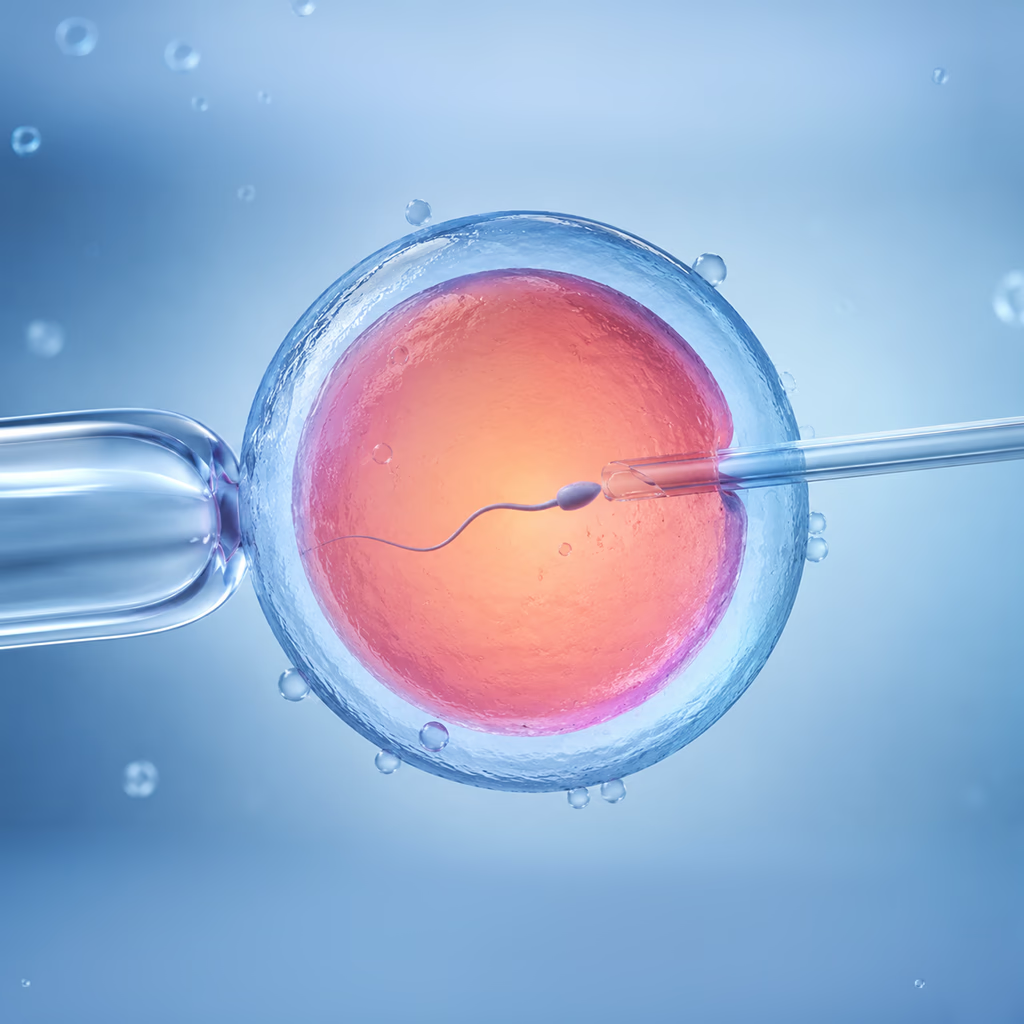
This is the defining step of ICSI. Each mature egg is placed under a high-powered inverted microscope. A fine glass needle (micropipette) holds the egg steady while another needle injects a single sperm directly into the egg's cytoplasm. The process is done with extreme precision to prevent any damage to the egg.
Even extremely low sperm count or motility can achieve fertilisation.
-
5
Embryo culture
After sperm injection, the fertilised eggs (embryos) are placed in an incubator that mimics the natural environment of the uterus. Embryos are monitored for 3–5 days for normal cell division and growth. The best-quality embryos are selected based on morphology and development. Embryos may be grown up to blastocyst stage for higher implantation success.
-
6
Embryo transfer
One or two best embryos are gently transferred into the woman's uterus. The procedure is simple, painless, and does not require anaesthesia. A thin catheter is used to place the embryos inside the uterine cavity under ultrasound guidance. The woman can go home after a short rest.
Remaining good-quality embryos can be frozen for future use.
-
7
Post-transfer care and pregnancy testing
The woman takes progesterone and hormonal support to prepare the uterine lining for implantation. Light daily activities are allowed; rest and relaxation are encouraged. A beta-hCG blood test is done 14 days after embryo transfer to confirm pregnancy. Our counselling team supports every patient through this waiting period.
Benefits of ICSI treatment
ICSI offers new hope to couples struggling with male infertility, previous IVF failures, or unexplained infertility, helping them achieve biological parenthood even when the chances seem minimal.
01 Overcomes severe male infertility
- Extremely low sperm count (oligospermia)
- Poor sperm motility (asthenozoospermia)
- Abnormal sperm morphology (teratozoospermia)
- Sperm that cannot penetrate the egg naturally
Even a single healthy sperm can fertilise an egg with ICSI.
02 Enables fertilisation in azoospermia
Sperm retrieved through TESA, PESA, or Micro-TESE can be injected directly into the egg — making biological fatherhood possible even when sperm is surgically retrieved.
03 Improves fertilisation and pregnancy rates
- Fertilisation rates reach 70–80% per egg
- Risk of failed fertilisation is dramatically reduced
- Couples with repeated IVF failures often succeed with ICSI
04 Ideal for previous IVF failures
If previous IVF cycles resulted in poor or no fertilisation, ICSI bypasses all sperm-related barriers and ensures the egg is fertilised directly — giving couples renewed hope.
ICSI transforms failed IVF cycles into success stories.
05 Allows use of frozen or retrieved sperm
ICSI works perfectly with frozen/thawed or surgically retrieved sperm, which may have low motility. Especially helpful for men who have stored sperm before cancer treatment or surgery.
06 Suitable for unexplained infertility
When all tests are normal but conception does not occur, ICSI improves the chances of fertilisation by removing all natural barriers — often providing the missing link.
07 Enables preimplantation genetic testing (PGT)
During PGT cycles, ICSI is preferred because it prevents contamination from surrounding sperm — ensuring accurate genetic analysis and safe embryo selection for healthy pregnancies.
08 High success rate in complex cases
ICSI offers one of the highest success rates in assisted reproduction. At Dr. Rama Sofat Hospital, ICSI achieves 70–80% fertilisation and 50–60% pregnancy rates in suitable candidates.
09 Minimal risk and safe procedure
ICSI is a safe and time-tested procedure with minimal complications. All processes are performed in a controlled, sterile lab environment by skilled embryologists to ensure patient safety and embryo quality.
10 Gives hope to couples who lost hope
For many couples who've struggled for years, ICSI represents a second chance — a scientific yet deeply emotional path to parenthood. At Dr. Rama Sofat Hospital, compassionate guidance supports every step.
Even one sperm and one egg can create a miracle — ICSI makes it possible.
Success rate of ICSI treatment
At Dr. Rama Sofat Hospital, our ICSI success rates are among the best in North India, thanks to advanced embryology labs, experienced fertility specialists, and personalised care.
70–80%
Eggs successfully fertilised
>60%
Embryos reaching blastocyst stage
50–65%
Clinical pregnancy rate per transfer
Factors that affect ICSI success
Female age
Women under 35 typically have the best success rates. After 40, egg quality declines, affecting fertilisation and implantation.
Sperm quality
Even though ICSI bypasses natural barriers, healthier sperm improve embryo quality and development.
Egg and embryo quality
Optimal ovarian stimulation and lab culture conditions play a key role in achieving successful outcomes.
Endometrial receptivity
A well-prepared uterine lining significantly enhances embryo implantation chances.
Lifestyle and health
Healthy diet, avoiding stress, and no smoking or drinking can positively influence results.
Laboratory expertise
The skill of embryologists, precision of micro-injection, and quality of lab equipment — areas where Dr. Rama Sofat Hospital excels.
Risks and limitations of ICSI
At Dr. Rama Sofat Hospital, we believe in complete transparency. Our fertility experts ensure that every patient understands both the advantages and potential challenges before starting treatment.
01 Not all eggs may fertilise
Even though ICSI bypasses sperm-related barriers, fertilisation is not guaranteed for every egg. Sometimes eggs may not respond to sperm injection, and only a proportion of retrieved eggs develop into viable embryos.
Success depends on both egg quality and sperm health.
02 Not all embryos develop normally
After sperm injection, a few embryos may stop developing or show slow growth due to chromosomal or cellular abnormalities. Modern culture systems and time-lapse monitoring help embryologists identify and select the healthiest embryos.
03 Slightly higher cost than conventional IVF
ICSI requires advanced lab equipment, micromanipulators, and expert embryologists. However, the success rate is significantly higher — especially for male infertility cases — making it a more effective investment.
At Dr. Rama Sofat Hospital, we offer transparent pricing with no hidden costs.
04 Possible risk of genetic transmission
In rare cases, if male infertility is due to genetic or chromosomal issues (like Y-chromosome microdeletion), these may be passed on to male offspring. Genetic counselling and PGT are often advised before proceeding.
05 Ovarian hyperstimulation syndrome (OHSS)
Some women may experience OHSS due to fertility medications — mild bloating, nausea, or abdominal discomfort. Severe OHSS is rare and closely monitored at every stage.
Our protocols minimise OHSS risk with personalised stimulation plans.
06 Emotional and psychological stress
ICSI involves multiple steps, hormonal changes, and a waiting period — all of which can cause emotional stress. At Dr. Rama Sofat Hospital, we provide emotional counselling and mental health support throughout the journey.
07 Risk of multiple pregnancy
If more than one embryo is transferred, there is a small chance of twin or triplet pregnancies. Our doctors carefully decide the number of embryos transferred based on patient age, embryo quality, and health condition.
We prioritise a healthy singleton pregnancy whenever possible.
08 Laboratory and technical limitations
Minor technical issues such as egg damage during injection are rare but possible. At Dr. Rama Sofat Hospital, all ICSI procedures are performed in HEPA-filtered, temperature-controlled labs using world-class micromanipulation systems.
Balancing risks and rewards
While these risks exist, the overall safety and success of ICSI far outweigh its limitations. Most couples who undergo ICSI experience successful fertilisation, healthy pregnancies, and live births — even in challenging infertility cases.
At Dr. Rama Sofat Hospital, every ICSI cycle is personalised, monitored, and supported with empathy, science, and honesty. Our goal is not just fertilisation — it's creating a safe, healthy, and joyful journey to parenthood.
How to prepare for ICSI treatment
At Dr. Rama Sofat Hospital, we believe that the right preparation can make your treatment smoother, increase your chances of success, and help you feel confident at every step.
01 Undergo a complete fertility evaluation
Before starting ICSI, both partners undergo a comprehensive fertility work-up:
- Blood hormone tests to check ovarian reserve, thyroid, and reproductive hormones
- Ultrasound scans to evaluate the ovaries and uterus
- Semen analysis to assess sperm count, motility, and morphology
- Additional genetic or infectious screenings if needed
02 Focus on a healthy lifestyle
- Balanced diet: foods rich in antioxidants, proteins, iron, and folate
- Regular exercise: light to moderate physical activity
- Avoid smoking and alcohol — both affect sperm and egg quality
- Limit caffeine intake
03 Manage stress and emotional well-being
- Practice mindfulness, yoga, or meditation
- Talk openly with your partner about expectations
- Join a fertility support group or speak with our in-house counsellor
A calm mind can positively impact hormonal balance and treatment success.
04 Take prescribed vitamins and supplements
Your doctor may recommend prenatal vitamins, folic acid, Vitamin D, CoQ10, or antioxidants before ICSI to improve egg and sperm quality. Always take these as prescribed and avoid self-medication.
05 Follow treatment instructions carefully
Once your ICSI cycle begins, you'll receive a personalised treatment calendar with:
- Daily fertility injections for ovarian stimulation
- Dates for ultrasound monitoring
- Timing for egg retrieval and sperm collection
- Instructions before and after embryo transfer
06 Avoid certain medications and procedures
Inform your fertility specialist about any medications, supplements, or ongoing treatments. Some may interfere with hormonal medications used during ICSI. Avoid X-rays or strenuous medical procedures close to your treatment dates unless approved by your doctor.
07 Prioritise rest and a positive mindset
Get enough sleep, stay hydrated, and surround yourself with positivity and support. A well-rested body and calm mind prepares you for the emotional highs and lows of the ICSI journey.
Preparing Together as a Couple — ICSI is a team effort — emotionally, physically, and mentally. Supporting each other through every step not only strengthens your bond but also helps you stay motivated and hopeful throughout the process.
Why choose Dr. Rama Sofat Hospital?
01 Legacy and trust
Over 55 years of excellence in fertility care and a trusted legacy in women's health
02 High success rates
High success rates even in complex and challenging infertility cases
03 Advanced embryology lab
Advanced embryology lab equipped with micromanipulators and strict quality control
04 Expert specialists
Expert team led by Dr. Ruchika Sofat and Dr. Amit Sofat
05 Personalised protocols
Personalised stimulation protocols designed for each patient's unique profile
06 Ethical and transparent care
Ethical, transparent, and patient-centred care with in-house genetic counselling
Frequently asked questions
What is ICSI treatment?
ICSI (Intracytoplasmic Sperm Injection) is an advanced form of IVF where a single healthy sperm is directly injected into an egg to achieve fertilisation. It is especially useful in cases of male infertility, low sperm count, or poor sperm motility.
How is ICSI different from IVF?
In conventional IVF, thousands of sperm are placed near the egg to allow natural fertilisation. In ICSI, embryologists select a single best-quality sperm and inject it directly into the egg — ensuring fertilisation even in severe male factor infertility cases.
Who should consider ICSI?
ICSI is recommended for couples where:
- The male partner has a low sperm count or poor motility
- There are problems with sperm shape (teratozoospermia)
- Previous IVF cycles have failed due to poor fertilisation
- Sperm has to be surgically retrieved (TESA, PESA)
- Unexplained infertility persists after years of trying
What is the success rate of ICSI treatment?
At Dr. Rama Sofat Hospital, our ICSI fertilisation success rate is 70–80%, with clinical pregnancy rates of 50–65% per embryo transfer — comparable to the best fertility centres in India. Success depends on age, egg quality, sperm quality, and uterine health.
Is ICSI painful?
The procedure itself is not painful. Egg retrieval is done under mild anaesthesia, and embryo transfer is a simple, gentle process. Most patients resume normal activities within a day.
How long does an ICSI cycle take?
A complete ICSI cycle usually takes around 2 to 3 weeks, including ovarian stimulation, egg retrieval, fertilisation, and embryo transfer.
Can ICSI be used with frozen eggs or sperm?
Yes. ICSI works well with frozen sperm or eggs, offering flexibility and convenience for couples undergoing fertility preservation.
Are there any risks with ICSI?
ICSI is a safe and well-researched procedure, but like all fertility treatments, it carries minimal risks such as:
- Ovarian Hyperstimulation Syndrome (OHSS)
- Multiple pregnancy (if multiple embryos are transferred)
- Rare chances of embryo genetic abnormalities
At Dr. Rama Sofat Hospital, we follow strict safety protocols to minimise these risks.
How many embryos are transferred during ICSI?
Usually, one or two embryos are transferred depending on the woman's age, embryo quality, and previous history. Transferring fewer embryos helps reduce the risk of multiple pregnancy while maintaining excellent success rates.
What is the cost of ICSI in Ludhiana?
The ICSI treatment cost in Ludhiana generally ranges between ₹1,60,000 to ₹1,80,000 per cycle, depending on medication dosage, lab techniques, and whether donor gametes or genetic testing are used.
Can ICSI guarantee pregnancy?
While ICSI greatly improves fertilisation chances, no fertility treatment can guarantee pregnancy. However, it provides the highest possible success rates, even in challenging cases.
How should I prepare for ICSI?
Maintain a healthy diet, avoid smoking/alcohol, manage stress, and take prenatal vitamins as prescribed. Following your doctor's instructions closely can significantly improve your success rate.
Begin your journey toward parenthood
If you've been struggling to conceive, our ICSI specialists are here to guide you with precision, compassion, and world-class fertility care.