Incision
Small keyhole incisions are made in the abdomen.
Laparoscopic Tubal Surgeries · Ludhiana, Punjab
A microsurgical or laparoscopic procedure to open a blocked fallopian tube near the fimbrial end — restoring tubal patency and improving natural fertility in women with distal tubal obstruction or hydrosalpinx.

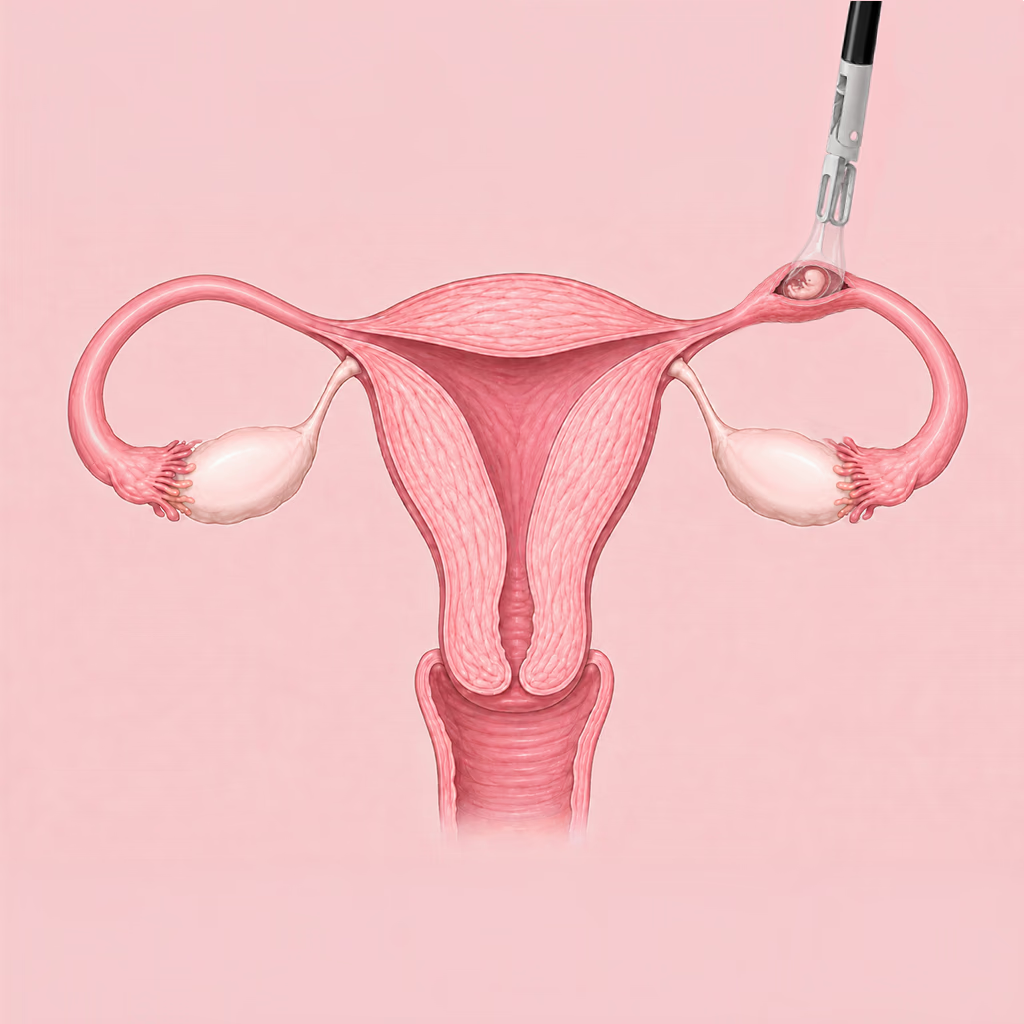
Salpingostomy, also known as Neosalpingostomy, is a microsurgical or laparoscopic procedure performed to open a blocked fallopian tube near the fimbrial (distal) end. It helps restore tubal patency and improve natural fertility in women with distal tubal obstruction or hydrosalpinx, allowing eggs to pass freely from the ovary to the uterus.
Before surgery, the following investigations are performed:
Laparoscopic Salpingostomy is a minimally invasive procedure done under general anesthesia.
Small keyhole incisions are made in the abdomen.
The blocked fimbrial end of the fallopian tube is opened using fine microsurgical instruments or laser.
The inner lining (mucosa) of the tube is carefully everted and sutured to prevent re-closure.
Any adhesions around the tube or ovary are removed to restore normal anatomy.
In cases of traditional open surgery (microsurgical salpingostomy), the same steps are performed through a small abdominal incision under magnification.
Myth
Fact
Yes, when done laparoscopically by an experienced fertility surgeon, it is very safe and minimally invasive.
Many women achieve natural conception if the tubes function normally post-surgery.
Most patients resume routine activities within a week.
The risk exists but is lower with proper post-operative care and in mild disease.
If you have been diagnosed with distal tubal blockage or hydrosalpinx, book your consultation at Dr. Rama Sofat Hospital, Ludhiana.