
Laparoscopic Tubal Surgeries · Ludhiana, Punjab

Laparoscopic Tuboplasty

Restoring tubal patency and natural fertility — advanced minimally invasive surgery to repair blocked fallopian tubes using 4K HD laparoscopic systems at Dr. Rama Sofat Hospital, Ludhiana.

Understanding blocked fallopian tubes

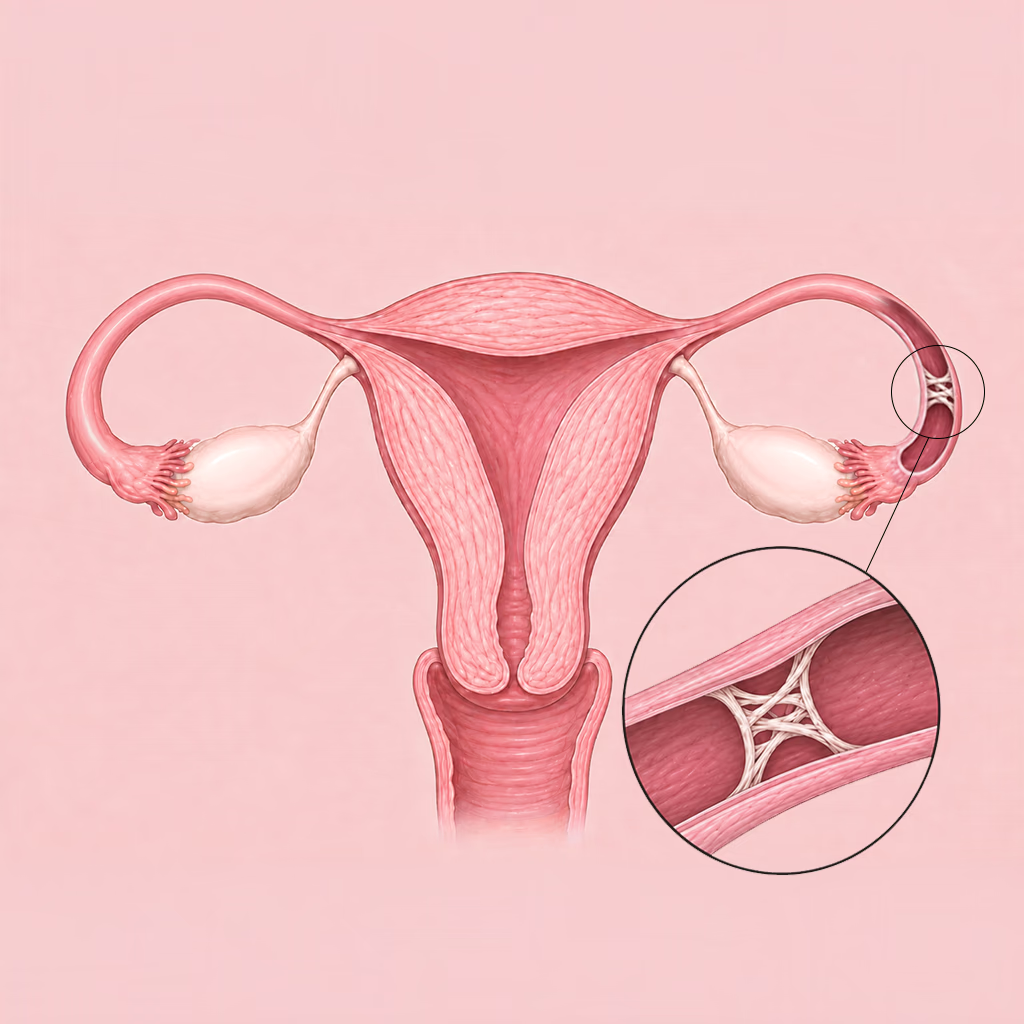
Blocked fallopian tubes are one of the leading causes of female infertility, accounting for approximately 25–30% of all infertility cases. The fallopian tubes play a critical role in natural conception, serving as the pathway where the egg meets the sperm and early embryo development begins. When one or both tubes are blocked — due to infection, surgery, or conditions like endometriosis — the egg and sperm cannot meet, making natural pregnancy difficult or impossible. At Dr. Rama Sofat Hospital, Ludhiana, we specialise in Laparoscopic Tuboplasty — a minimally invasive, fertility-restoring surgical procedure that gently reopens or repairs damaged fallopian tubes through small keyhole incisions.

What is tuboplasty?

Tuboplasty is a surgical procedure aimed at restoring the patency (openness) of the fallopian tubes. It is performed when the tubes are blocked or damaged due to infections (like PID or tuberculosis), previous surgeries, endometriosis, or ectopic pregnancy. The goal is to remove the blockage or reconstruct the tube so that natural conception can occur.

Causes of blocked tubes

  • Pelvic Inflammatory Disease (PID) — often caused by STIs like chlamydia or gonorrhoea
  • Genital tuberculosis — a major cause in Indian women
  • Endometriosis — tissue growth outside the uterus can block or damage tubes
  • Previous pelvic or abdominal surgeries — causing adhesions (scar tissue)
  • Ectopic pregnancy — previous treatment may have affected the tubes
  • Appendicitis or pelvic abscess — infection spreading to the tubes
  • Previous tubal ligation (family planning surgery)

Symptoms

  • Difficulty conceiving despite regular unprotected intercourse
  • Chronic pelvic pain (in some cases)
  • Unusual vaginal discharge (if infection-related)
  • History of pelvic infection, STIs, or surgery

Many women with blocked tubes have no obvious symptoms and are diagnosed only during fertility evaluation.

Diagnosis

  • Hysterosalpingography (HSG) — X-ray dye test to visualise tubal patency
  • Sonohysterography (SSG) — ultrasound-based evaluation
  • Diagnostic Laparoscopy with Chromopertubation — the gold standard, where dye is passed through the tubes under direct vision

Impact on fertility

Blocked tubes prevent the egg and sperm from meeting. Even partial blockage can delay or prevent conception. If tubes are damaged and filled with fluid (hydrosalpinx), the toxic fluid can also reduce IVF success rates by harming embryo implantation.

When to see a doctor

  • Unable to conceive after 1 year of trying (or 6 months if over 35)
  • History of pelvic infections, STIs, or abdominal surgery
  • Known history of ectopic pregnancy
  • Abnormal HSG report suggesting tubal blockage
  • Chronic pelvic pain or unusual discharge

Treatment options

01

Medical Management

Antibiotics may be prescribed if the blockage is caused by an active infection (e.g. PID or tuberculosis). However, medication alone cannot physically reopen a blocked tube. It is primarily used to treat the underlying cause before surgical intervention.

02

Laparoscopic Tuboplasty (Surgical Repair)

Laparoscopic Tuboplasty is a minimally invasive procedure performed under general anaesthesia. Tiny incisions are made near the navel to insert a laparoscope (camera) and fine surgical instruments. The blocked segment of the tube is identified, and depending on the type and location of blockage, different techniques are used:

Fimbrioplasty

To open or reconstruct the fimbrial end (near the ovary).

Salpingostomy

To create a new opening if the fimbrial end is sealed.

Tubal Adhesiolysis

To gently remove scar tissue or adhesions around the tubes.

Tubal Reanastomosis

To reconnect the healthy portions of the tube if blockage is in the middle segment (commonly after previous sterilisation).

03

When IVF Is Recommended

In some cases, especially when both tubes are severely damaged or completely blocked, the tubal tissue is unhealthy, or previous surgery has failed — In Vitro Fertilisation (IVF) becomes the best alternative. At Dr. Rama Sofat Hospital, we offer both laparoscopic correction and IVF under one roof.

Advantages of laparoscopic tuboplasty

Very small incisions and minimal scarring
Quick recovery and less post-operative pain
Early return to normal activities
Simultaneous diagnosis and treatment of associated conditions (e.g. endometriosis, adhesions)

Prevention & lifestyle management

  • Practicing safe sex and avoiding untreated pelvic infections
  • Seeking early treatment for pelvic pain or endometriosis
  • Avoiding unnecessary pelvic surgeries
  • Maintaining a healthy lifestyle to reduce inflammation and hormonal imbalances

Myths vs facts

Myth

Fact

Blocked tubes mean permanent infertility.
Many women can conceive naturally after laparoscopic treatment or through IVF.
Surgery for blocked tubes is very painful.
Laparoscopic surgery is minimally invasive, with quick recovery and minimal discomfort.
IVF is the only option for all tubal blockages.
Not necessarily. Mild or moderate blockages can often be corrected surgically.

Frequently asked questions

Can blocked tubes be cured?

Yes. If the damage is mild, laparoscopic tuboplasty can reopen or repair the tubes. In severe cases, IVF may be a better option.

What is the success rate of laparoscopic tuboplasty?

Success depends on the site and severity of blockage, but pregnancy rates can reach 30–60% after surgery when performed by experienced specialists.

Is the procedure painful?

No. It is done under anaesthesia, and patients typically experience minimal discomfort afterward.

How soon can I try for pregnancy after surgery?

You can begin trying for conception after 1–2 months, once complete healing has occurred.

If surgery fails, what are my options?

In such cases, IVF (In-Vitro Fertilisation) offers an excellent alternative for achieving pregnancy.

Why choose Dr. Rama Sofat Hospital

55+ years of legacy in women's health and fertility care
Expert laparoscopic surgeons trained in fertility-preserving microsurgery
High-definition 4K HD laparoscopic systems for precision and safety
Seamless coordination between fertility specialists and surgical teams
Personalised post-surgery fertility counselling and IVF support if needed
Trusted by thousands of women across Punjab, Haryana, Himachal Pradesh, and Chandigarh

Book your consultation

If you are struggling with blocked fallopian tubes or tubal infertility, book your consultation with our experts at Dr. Rama Sofat Hospital, Ludhiana.

Book Now

Videos & testimonials